This website and the associated organization of the same name have the mission of providing Jews and non-Jews with the intellectual tools to stand up to Zionist intimidation and manipulation.
Search This Blog
Pro-America, Pro-Palestine, Anti-Israel
Printing Blog Entries
Until I implement a better widget, the procedure to print a single blog entry or convert it to a pdf page goes as follows:
Click on the time stamp under the share button at the end of the blog entry in order to view the article in single blog entry mode.
Click on the split diamond element of the Share/Save button that appears right above the Comments header.
Scroll the new web page until you see the print friendly button at the end of the 2nd column.
Click the print friendly button and make any desired modifications to the printer friendly version of the article that appears.
Send the final printer friendly version of the article to your printer or convert it to a pdf file if you so desire.
bring rationality to the discussion of US foreign policy as well as
document the threat of Zionist terrorism, subversion, and ethnonational financial warfare
while I finish The Israel Lobby and American Society.
For more info click here or here!
In addition, I am liquidating my extensive comic book collection to support my pro-Palestinian anti-Israel projects. Some go back to the 1960s, but most go back to the 80s when I was working on digital special effects software and script doctoring.
Many like Nexus (optioned by Disney) have relevance to pop culture views of Jews, Palestinians, the Holocaust, terrorism, and Islam. If you have any special interests, let me know at ThorsProvoni@aol.com.
I can be inspired to add blog entries relating comic books, pop culture, and US foreign policy. I am gradually listing all my comic books at Joachim's comic collection.
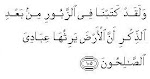
wa-laqad katabnaa fi-l-zabur min ba`di-l-dhikri anna-l-arda yarithuha `ibadiya-l-salihuna We have decreed in the Psalms, from beside (in addition to) the reminder, that the land shall be inherited by My righteous (pious — salihuna) servants.
The Promise: Peshitta Matthew 5:5
ܛܽܘܒ݂ܰܝܗܽܘܢ ܠܡܰܟ݁ܺܝܟ݂ܶܐ ܕ݁ܗܶܢܽܘܢ ܢܺܐܪܬ݂ܽܘܢ ܠܰܐܪܥܳܐ tubihun limkika dehenun ni'rtun le'ar`a To the meek their happiness as they will inherit the land.
The Promise: Greek New Testament Matthew 5:5
Makarioi hoi praeis hoti autoi kleronomesousin ten gen Fortunate are the humble, because they will themselves inherit the land.
The Promise: Biblia Vulgata Matthew 5:4
Beati mites: quoniam ipsi possidebunt terram. Blessed are the meek, for they will inherit the land.
But the humble shall inherit the land (i.e. Palestine),and delight themselves in the abundance of peace.
Key Principle
Tip O'Neill said: "All politics is local."
Martillo's globalization extension: "All local politics is global and all global politics is local." (See Mondoweiss comment.)
Acting with justice: Sayings of the Fathers 1:14
[Hillel] was accustomed to say: If I am not for myself, who is for me? And when I am for myself, what am I? And if not now, when?
Ode to Cholent by Heinrich Heine
Holy cholent, dish celestial, Daughter of Elysium: If he'd only tasted cholent, Schiller would have changed his hymn. God devised and God delivered Unto Moses from on high, And commanded us to savor Cholent for eternity.
Heine's Original German from Prinzessin Sabbat
Schalet, schöner Götterfunken, Tochter aus Elysium! Also klänge Schillers Hochlied, Hätt er Schalet je gekostet.
Schalet ist die Himmelspeise, Die der liebe Herrgott selber Einst den Moses kochen lehrte Auf dem Berge Sinai,
Wo der Allerhöchste gleichfalls All die guten Glaubenslehren Und die heil'gen Zehn Gebote Wetterleuchtend offenbarte.
I run a hi-tech company. I am an inventor and created a key technology that makes it extremely hard for governments and mega-corporations to control the Internet (see Routing in a Bridged Network). Americans can probably thank me that they have any access over the Internet to news reports that have not been sanitized by US corporate media.
Because of my business in the Middle East, I have become concerned about US Israel policy and have begun to apply my background in Eastern European and Jewish studies on behalf of pro-Palestinian anti-Israel and anti-Zionist activism.
Because Zionists and Islamophobes are busily rewriting the history of minorities within the Islamic world, both texts like Matt Godish' study Jewish Questions: Responsa on Sephardic Life in the Early Modern Period and also critical reviews of such works like that of Matthias Lehman below are quite important to understanding the historical background to the conflict over Palestine as well as to creating a sense of the magnitude of Zionist disinformatsia.
Sometime in the mid-sixteenth century, Simeon, a Jew from India, roamed the cities of the Ottoman Balkans in order to track down Jewish men from his homeland who had abandoned their wives in order to secure writs of divorce from them so that the women would be free or remarry according to the stipulations of Jewish law. Three months later, one of those Indian husbands, Levi, declared that he was in reality not called Levi at all, and that Simeon had first intoxicated him with wine and then tricked him into signing a divorce using the name of Levi, thus setting free a married woman he had never known. In response to this accusation Simeon claimed that he had surprised Levi when he stole money from another Jew and threatened to expose him, which had apparently caused Levi to take revenge and, in turn, accuse Simeon of arranging a fraudulent divorce.
This is one of the intriguing cases from the early modern Sephardic diaspora collected in Matt Goldish's Jewish Questions. Goldish presents forty-three such rabbinic responsa in a lucid English translation, arranged thematically in five different parts and accompanied by brief introductory comments. Responsa--legal opinions that rabbis wrote in response to a problem of Jewish law posed to them--have long constituted an important source for the writing of Jewish social and cultural history. Often, as Goldish points out, rather than the resolutions, it is the questions posed that prove to be of most interest to the modern historian. Though typically edited and redacted, they preserve the details of cases that speak to everyday problems encountered by Jews in past centuries and provide information that would otherwise never have come down to us. Many of these cases, like the one cited above, involve the problem of abandoned wives, or "grass widows" (agunot, in Hebrew) who cannot remarry because the fate of their husbands cannot be established with certainty, or because the husband refuses to grant a divorce. The study of responsa literature opens a window on the daily lives of Jews in the past and they provide some insight into the experiences of ordinary men and women beyond the literate elites who typically dominate the historical record.
Breaking and Creating Identities to Forge Nations or to Destroy Peoples
Usually political economics describes political and economic interactions between groups with well-defined identities, but a major aspect of the transformation of the pre-modern into the modern world lies in the creation of national identities that have in some sense trumped or established dominance over other pre-existing identities that may have been based in religion, economic role or some other characteristic. Thus the historical political economics of interacting or overlapping identities itself is key to understanding the developments leading to the consolidation of modern nation-states and possibly gives hints to transnational identity reorganization that seems to be taking place as globalization itself becomes an input into identity creation and destruction. For the last two centuries Jews have constituted the archetypal transnational political and economic transformational actor because they inherited from the medieval period an international practically worldwide trading network and a sacred law that acted among Jews as a universal commercial and often civil or criminal code. In some situations where the Jewish community has appeared conservative by resisting certain identity transformations like regional nationalism or even their own forms of ethnic nationalism, they are really expressing their status as an avant-garde, for they may have already undergone a re-identification process like Algerian Jews, who developed French or Jewish national identities before co-resident Muslim populations developed Arab or Algerian identities. In other situations Jews may drive, lead or play major roles in the development of new identities like those associated with the development of 19th century German national consciousness or with the modern politicized sexuality of the North American Gay Liberation movement.
The German Jewish push for a united Germany made a lot of sense because it would facilitate Jewish wholesaling and retailing and because the campaign for Jewish emancipation (equal rights and citizenship) would only have to deal with only one national government and not a multitude of German states. Achieving this goal required diminishing the importance of religious identity within German territories. Because German Jews were unwilling to abandon the religious Jewish identity-based social networks that gave Jews competitive advantage in business and because a single citizenship failed to eradicate cultural, ethnic, or non-German national identities of Poles, Bavarians, Saxons, Sorbs and other populations within the German Empire, within a few decades German Jews were developing their own non-religious Zionist political and cultural identity.
For many and German Jews especially, the persistence of older pre-unification identities acted as an impediment to advancement in politics, business or the arts. A Jewish politician in German Saxony might have had difficulty in proving his credentials as a Saxon leader, but if the political "market" could be segmented among conservatives, liberals and socialists, he might easily become a socialist leader. This type of market segmentation also applies to the arts or to retailing. The late 19th century and post-WW2 music industry even created identities based on the cult following of artists or performers like Franz Liszt, Richard Wagner, or the Grateful Dead. In addition, at the same time that modern society has been creating a supermarket of identities from which individuals may choose, other identities have been delegitimized in certain contexts rather as marijuana was criminalized in the early 20th century. For example, as the power of religion decreased, Jews and other groups for whom religious identity could be a political impediment tended to demand complete or nearly complete separation of church and state. Almost as if to fill a void left by religion, which previously had claimed authority over sexuality, sexuality has become so politicized that it nowadays makes sense to refer to the integration of sex and politics -- first in the late 19th through early 20th and then again in the late 20th century,
Because traditional Jewish trading culture tended to provide more opportunities for women, German Jewish women played more prominent business roles than German gentile women and quickly became political leaders for women's liberation in what could almost be described as a reform movement to harmonize the German and Jewish civil codes to the exclusion of traditional Christian sex or gender conventions. In Eastern Europe not only did the division of Poland among Prussia, Austria, and Russia make the interaction of Jewish identity politics with the surrounding gentile political cultures considerably more complex than the situation in German-speaking territories, but Ethnic Ashkenazim were also far more culturally and economically distinctive in historic Poland than Jews were in 19th century Germany. In Polish lands Jews played critical economic roles in distribution, in estate management, in hospitality and in tax farming. Because Jews worried that the ruling class would become uncomfortable with visible expressions of Jewish economic power, Jews often applied sumptuary laws to themselves and made efforts to appear harmless and insignificant. Catholic Poles, who had no divorce, and orthodox Russians, who rarely divorced, were often critical of frequent Jewish divorce and remarriage that seemed tantamount to promiscuity by 19th century E. European Christian standards. Because Jewish men often focused on studying sacred scripture while women ran the business, Eastern European gentiles often considered Jewish men to be effeminate and Jewish women to be aggressive, masculine and dominating.
All three governments ruling divided Poland tried to reform their own Jewish communities, which at the same time were trying to reform themselves in response social and economic pressures associated with modernization, which was among other things threatening the tradition Jewish economic niche. All the efforts at reform weakened traditional religious authority and the ill-conceived policies of Nicholas I effectively shattered (but did not completely eradicate) Russian Jewish communal structures. By the 1840s-1850s Russian Jews, who are probably becoming sensitive to the push for revolution in Central and Eastern Europe, developed a full-fledged often radical intelligentsia that in many situations collaborated with contemporary Russian and Polish intelligentsias. The Jewish intelligentsia developed an assortment of programs to mobilize Jews and non-Jews not merely for reform but also for revolutionary changes in every aspect of Russian imperial culture including politics, economics, religion, gender, sexuality, and eroticism with a lot of mixing and matching. For example, Jewish and non-Jewish communists favored gender equality but were rather prudish about eroticism, which they considered decadently bourgeois. In contrast, Zionists perhaps compensating for the assumption of Jewish effeminacy developed a strong hypermasculine homoerotic current comparable to a tendency of German Nazism. Yet both Zionism and German Nazism also had a strong emphasis on Kinder, Küche, Kirche as long as Kirche refers to the Church or Synagogue of Racial Holiness.
As revolutionary intellectual currents migrate westward with E. European Jews, an extremely lively German and Austrian discussion develops from the 1890s until 1933 to address gender or sexual identity and to develop a new sexualized Weltanschauung that is preserved in the oeuvres of Sigmund Freud, Arthur Schnitzler, Thomas Mann, Otto Weininger and many others. In addition to debate over the Frauenfrage (Women's Question), there are occasional references in that literature to the Umgeschlechtungsbewegung, which translates as "Regenderization Movement," which is often perceived as Jewish -- particularly in anti-Semitic discourse, and which is an early forerunner of the homosexual mobilization movement that Columbia Professor Joseph Massad calls the Gay International.
Some elements of international gay culture creep into US film and theater during the 1920s, but it seems mostly absent from the Yiddish culture brought with Eastern European Ashkenazi immigrants to the USA from the 1880s-1920. Only during the 30s do large numbers of creators and participants in the Central European discourse on sexuality flee to the United States, and the seeds of sexualized politics really do not blossom until the 60s and 70s with the appearance of abortion rights, women's and gay liberation movements,* which seem to have no intellectual ancestral connections to the 19th and 20th century Suffragism but are almost certainly the reincarnation of the earlier Central and Eastern sexual identity politics. As was the case with Czarist Russian radicalism and the pre-1950s Soviet Union, the leadership has been predominantly Jewish. All three movements focused on attacking traditional Christian religion, mores, and morality, which a cynic might point out were impediments to Jewish advancement in US culture and society.
After the 1980s like practically everything else associated with the North American Jewish community, sexual identity politics has been thoroughly Zionized as is clearly indicated by the massively intertwined Jewish Zionist and gay activism described in two recent Toronto National Post articles entitled
Queers Against Israeli Apartheid (QuAIA), an anti-Zionist protest group that made corporate sponsors squirm by flying banners at last year’s Toronto Pride parade, has been banned this year, along with any other group that would advance a political agenda.
“We will be very much more careful this year. We will make sure that we have a presence to ensure that people don’t slip into the parade,” Pride Toronto executive director Tracey Sandilands said today.
The number of volunteer marshals along the barricades is to be increased from 25 to 80 to prevent unauthorized people joining the parade, she said.
“What happened last year was ... people on the sidelines who pushed into the parade and put up banners. We were totally not expecting it,” she said.
Her announcement came with a warning to grand marshall El-Farouk Khaki not to use his ceremonial position as a pulpit to promote an anti-Israeli boycott.
Frank Dimant, executive vice-president of B’nai Brith Canada, today called for disciplinary action against Mr. Khaki, a founder of the national support group Salaam: Queer Muslim Community, because he spoke to a QuAIA event on the weekend.
A flier for the event said “Israel has now begun to frame itself as a tolerant, queer-positive democracy. This can never be reality under Occupation.”
Mr. Dimant said Mr. Khaki’s presence -- he made opening remarks and welcomed the main speakers -- “has already contravened Pride Toronto’s stated policy.”
B'nai B'rith Canada is practically claiming ownership rights over gay politics.
The second article treats gay politics as so mainstream that it does not even bother to explain that LGBTTIQQ2S stands for "Lesbian, Gay, Bisexual, Transsexual, Transgendered, Intersexual, Queer, Questioning, 2-Spirited."
As the reincarnated regenderization movement has begun to penetrate into the Islamic world as a Western cultural export, it has encountered strong resistance or revulsion from more traditional religious and intellectual leaders, whose sense of morality has not been subjected to the same erosion process that took place in the West. Because of desire for better integration into European and North American societies and discomfort with public displays or discussion of sex or affection, whether heteroerotic or homoerotic, western Arabs and Muslims have tended toward defensiveness and apologetics with regard to Islamic rejection of the Gay International when they should be attacking the underlying chauvinistic, imperialist and Zionist assumptions of regenderization discourse. As a result Zionist gay and gender equality activists have been free to legitimize and to market a chauvinistic perception of Arab and Muslims societies as so savage that Western states have no choice but to invade and to occupy them in order to save Arabs and Muslims from their own barbarism.
Update
From Israeli Television:
הקטעים מתוך התוכנית "עד החתונה", העוקבים אחרי מערכת היחסים המתפתחת בין הראל ואמיר
From an Israeli TV show - 'Til the Wedding - the story of Amir and Harel. Part 18
Note
* Non-politicalAmerican gay discourse starts in the 1950s with the beats -- especially Allen Ginsberg's circle, but Ginsberg himself was never really political with homosexuality, and he occasionally indulged in heterosexuality. He was glad that Gay Liberation drove the police and organized crime out of gay culture. Ginsberg's mom was a very serious Communist, who made up stories like "'The good king rode forth from his castle, saw the suffering workers and healed them" or at least Ginsberg made that claim.
I am not sure why Dr Jim West decided to comment on Max Blumenthal's video investigation of Christian Zionists in Israel, but it is always good when a pastor takes a stand against Hagee and his friends.
Because they distort so profoundly the truth of the Gospel. Christian Zionism is, has been, and will continue to be an anti-biblical non Christian heresy populated by nothing but uninformed ignorant dilettantes who wouldn’t know correct biblical interpretation if it stared them down. They actually believe the ‘Left Behind’ series is exegesis!!!!!!
We noted last week that the Jewish Agency was trying to promote one of its programs last week with a series of racy ads.
We noted last winter that Israel’s Ministry of Tourism was using sex to sell Israel as a destination spot.
And we joked a few months ago that Birthright NEXT, which was giving out flasks to promote itself, should perhaps consider distributing branded condoms as well.
Someone is paying attention to the Fundermentalist, because we now present to you the official “Come and visit Tel Aviv” condom, brought to you once again by Israel’s Tourism Ministry.
No. I did not make up that slogan. It is the official catchphrase for condoms that Israel gave out at a fund-raising event in London last week, according to UPI.
My favorite passage from the story:
The condoms were packed in a box used by a reputable Dead Sea cosmetics firm, used to market cosmetics, the Web site said, quoting one of the agents. "Some thought they were beauty supplies and brought them home to their wives. They were appalled when they opened the package," another official said.
On its part, Israel's Ministry of Tourism issued an apology saying it will investigate the incident. "This was an initiative contrary to our policy," the statement said.
On second thought. Maybe we don't want any credit for this at all.
I was working on this diary last Sunday when news came of Dr. Tiller's murder, and I set it aside. After Obama's Cairo speech, I believe it has renewed urgency. IMHO, the prosecution of this case cannot be squared with the spirit of that speech
On May 27, five defendants associated the now-defunct Holy Land Foundation--once the largest Muslim charitable foundation in the US--were given sentences totaling 180 years in prison. The first trial ended in a mis-trial, and one of the defendants was almost acquitted on all counts. Although billed as a terrorism trial, there actually were no such charges. The Holy Land Foundation supported charitable work in the Occupied Territories, and they were charged with giving money to Hamas, which has its own network of charitable organizations.
At the sentencing hearing, one of the US attorneys told the judge it was "a no brainer" to enahnce the sentences for furthering terrorist efforts--effectively seeking to use charges that they had never proven in court.
Excerpts from coverage by Texas Lawyer, and an interview with defendants' family and lawyers on Democracy Now on the flip, along with a discussion why the trial and sentencing are emblematic of the deeply wrong-heaeded nature of our so-called "war on terror."
Sa'ib `Urayqat is the official buffoon of the Palestinian Authority. In fact, he wears a hat with that title. After Obama speech, he gave different opinions of the speech depending on the media outlet: he considered the speech a great and most dramatic breakthrough in Western-Muslim relations on Al-Arabiyya TV, and yet he was cautious and reserved in his estimation on AlJazeera TV. All in the same day. Sphere: Related Content
In his review of Joseph Massad's Desiring Arabs, Eric Walberg provides yet another angle to look at the admixture of sexuality, identity, politics and imperialism. Although the perspective is different, the ideas contained in this article, Insert Zionist Phallus, Achieve Orgasm, and The Zionism of Gay Politics are all interrelated and interconnected.
Because I tend to use the lens of Eastern European and Jewish studies, I could argue that to some degree the ostyidish population migrating westward intellectually colonized Central European, Western European, and North American notions of sexuality, and then European imperialists mentally colonized the Arab and Muslim world with the notions of the Gay International, the Regenderization Movement or die Umgeschlechtungsbewegung.
This double colonization process could be contrasted with the evolution of concepts of political sexual identity in former Soviet territories from which ideas of regenderization have been excluded until quite recently.
Illuminated miniature of Shah Abbas I (1571-1629) of Persia, embracing his wine boy
The Western "civilising" project in its many guises has given rise to strange bedfellows. Not only do Christian and Islamic fundamentalists -- officially enemies of each other -- find common cause in demanding more public displays of religiosity and less liberal social policies regarding sex. In fact, as Joseph Massad shows in his new book, Desiring Arabs, both parties -- again, paradoxically, as enemies of the international gay movement -- actually work in tandem with that very movement, aiding in the process of defining people according to the Western paradigm of heterohomo sexual categories, which, prior to the 19th century, did not even exist.
This is the central thesis in Massad's controversial study, which surveys Arab social history as constructed by Arab scholars and writers themselves from the 19th century on, heavily influenced by Western thought and research methods.
Guest Article from David Shasha, Director of the Center for Sephardic Heritage in Brooklyn, N.Y
David Shasha offers a review of Zohan, which differs from my interpretation in Zohan Offends for One State. His analysis is remarkable, for it provides further evidence of the continuity of American Zionist Jewish and Soviet Jewish mentality as described in The Magnes Zionist: Kristol and the Shikse.
Shasha's conclusion has important implications for Jewish-dominated American society, politics and culture:
What Adam Sandler has done wittingly or unwittingly is to bring together Jewish paranoia and Jewish power by dwelling on the symbolic meaning of the sexual act and the way in which the orgasm can serve as a unifying marker of a new-found Jewish assertiveness and aggression that is literally embodied in the Zohan whose dual nature brings together the power of the phallic in both sexual and military terms.
Insert the Zionist Phallus to Achieve a Diaspora Orgasm: Adam Sandler’s ´Zohan¡ as the New Jewish Hero
Sigmund Freud related his own personal sense of Jewish pathology, a product of the powerlessness generated by the Diaspora (definitively symbolized by the recounting of an episode in The Interpretation of Dreams where Freud’s own father has his hat knocked off by a Gentile and cowers off to retrieve it), to the explosiveness of the sexual drive.Though he never really makes this bond explicit as far as Jewish identity goes, it has become clear enough over many decades of Freud studies that the father of psychoanalysis found sex and identity to be inextricably linked.
One of Freud’s many Jewish disciples, the novelist Philip Roth, took this sense of Diaspora pathology and made the link quite explicit.In his classic, and in some Jewish quarters still reviled, 1969 novel Portnoy’s Complaint, Roth brings his American Jewish protagonist into the bed of a real Israeli sabra, a girl named Naomi, who sexually emasculates him.
Then she said a kind thing, She could afford to, of course, way up there.´You should go home.¡
´Sure, that’s what I need, back into the exile.¡
And way way up there, she grinned.That healthy, monumental Sabra!The work-molded legs, the utilitarian shorts, the battle-scarred buttonless blouse the beneficent, victorious smile!And at her crusty, sandaled feet this … this what?This son!This boy!This baby!Alexander Portnoise!Portnose!Portnoy-oy-oy-oy-oy!
Roth, like Freud, sees the Diaspora Jew as powerless.And while Freud died before the founding the State of Israel, it would not take a prophet to see that Portnoy’s dilemma is at root Freudian: Rather than assert his own identity as a Diaspora Jew, he remains impotent in the face of the Israeli-Zionist uber-Jew.The Sabra Jew is here all-powerful, the Diaspora Jew a pathetic example of a human being.Unnatural, twisted, pathological, repressed, neurotic, we see in Roth’s novel the classic trope ´Negation of the Exile¡ that marks Jewish life outside of Israel as warped and inauthentic.
Jewish funnymen from Lenny Bruce to Woody Allen to Mel Brooks to Larry David and most recently Judd Apatow have enriched the comedic traditions of America.In their own way, such Jewish comedians reflect a critical strain of the Ashkenazi Diaspora mentality.In his rants against standards of civility, Lenny Bruce was defying his own religious culture; by creating the ´nebbish as hero¡ Woody Allen was sexualizing and secularizing the effete, intellectual Talmud student whose erotic charms stem from his cerebral nature, it is this intellectualism that serves as his entryway into the Shiksa world where cross-cultural pollination can be effectuated; and in the case of Mel Brooks there was an attempt to draw from the Jewish ethical tradition critical ways of seeing to create a universal humanism.
But in the new generation of Jewish comedians, represented by Adam Sandler, Judd Apatow and Seth Rogan, there is a renewed concern for reframing sexuality by addressing the matter of the Diaspora Male Jew and his powerlessness.Incorporating revisions of the old Woody Allen paradigm, Apatow’s films typically present a nebbishy young Jewish boy whose incompetence, itself an anti-intellectualism as the characters lean towards slackerism, endears him to the blonde-haired, blue-eyed Shiksas that are less elite WASPs as they were in the case of Woody Allen and more akin to the erotic female dream creatures of pornography.
When Adam Sandler released his movie ´You Don’t Mess with the Zohan¡ last year, it became clear that another paradigm shift was taking place.In the wake of the neo-Zionist kerfuffle of Sacha Baron Cohen’s Borat character, who trafficks in anti-Semitic Russian stereotypes by deploying textbook examples of such racism and re-framing it within a gibberish Israeli-style Hebrew that Borat uses in place of the Russian language, Sandler, perhaps the most popular and commercially successful comedian working in movies today, jumps into the deep end of the pool by creating an entire movie based on Middle Eastern stereotypes and motifs.
The ´Zohan¡ is a former Israeli counter-terrorist officer who comes to New York home to the largest concentration of expatriate Israelis in the world in order to escape his Israeli past which is full of violence and cruel actions towards Arabs.He has faked his own death when on a mission to take out a Palestinian named Phantom (original Arabic name, Fantoosh) in Lebanon.He is an ace operative who is widely known for his fearlessness, but has tired of his role in the world; in his bedroom he pores over a Paul Mitchell styling book and dreams of becoming a hairdresser to escape his predicament in Israel.
Immediately upon his arrival to America we see that Zohan is marked as both a violent thug and a sexual predator.After assisting a young Jewish New Yorker who was beaten up simply for being involved in an accident while riding his bike (an episode similar to that of the hat being knocked off of Freud’s father’s head), he is warmly taken to the boy’s home and fed a large bowl of Matzoh Ball soup.After eating the soup, the Zohan proceeds to have sex with the boy’s older and voluptuous mother played by a zoftig Lainie Kazan.When the boy enters his mother’s bedroom to see the couple in flagrante delicto, Zohan sets the tone for the rest of the movie: He tells the boy that sex is a beautiful thing, there is nothing is wrong with it; he is just expressing his thanks for the soup and the hospitality with the precious gift of a roll in the hay.
While such a scene has probably lost its ability to shock the contemporary moviegoer, the point that Sandler is making here has deep roots in the Ashkenazi Jewish consciousness: Zohan, like Portnoy’s Naomi, is a different kind of Jew than those of movies past.He thinks with his phallus and uses sex to express his true identity.
Now it is not all that outlandish to see the dual aspects of his character the macho, violent killer of Arabs and the libertine sexual predator as complementary sides of a single personality.In the recent history of Jewish culture, a culture exclusively understood through its Ashkenazi antecedents, the place of sex and sexuality has become central.From Mel Brooks, Lenny Bruce and Woody Allen we see the evolution of a sexual pathology that incorporates the Shiksa other, the neurotic, flaccid, cerebral Talmud student, and the repressive nature of Jewish sexuality in a heady swirl that turns sex into something more than just sex.Sex in this context becomes an emblem of Jewish identity in the Diaspora.
As Philip Roth has brilliantly argued in Portnoy’s Complaint, the Diaspora Jew could literally not achieve an erection while in the presence of an Israeli Sabra.The Israeli there was a woman who neutralized the Diaspora phallus in the ultimate ´negation¡ of non-Zionist Diaspora Jewish identity.Now where Roth, like Freud, refused the Zionist option and elected to remain impotent and weak as a member of the Diaspora tribe, it is clear that the subsequent generations of American Jews have not taken this attitude of Diasporism at any cost.
Sandler’s Zohan is perhaps the first explicit attempt to create an Israeli-Zionist character reflecting the love affair of American Jews with the state of Israel in a way that cleverly incorporates the sexual metaphor and often literalizes that metaphor in new and unexpected ways.Caught in the web of this assertion is the complex factor of Israelis leaving Israel to escape the inexorable violence and seeking a new life while still maintaining the trace of their Israeli cultural posture, itself superior to the misanthropy of Diaspora Jewish existence.The Jewish victim now becomes the Jewish victimizer.
Sandler, along with his co-writers Robert Smigel (the Saturday Night Live writer who does the TV Funhouse cartoons) and the aforementioned Judd Apatow, paints an eerily perceptive, if caricatured,portrait of the expatriate Israeli world in New York; a world of Hummus, highly-sexed men and electronic stores which cheat their customers.It is by deploying the macho barbarian ethos of the Israeli that the film makes its central thematic points.
Zohan adapts to New York by seeking to fulfill his bizarre dream to be a hairdresser; a profession not uncommon in the Israeli expatriate culture where many yordim emigrants open up beauty salons.Flipping salon culture on its head, Zohan seeks to make macho the stereotypical gayness of the male hairdresser; this in light of his parents’ earlier pronouncements on the faygele nature of the typical male stylist.
After his failed attempt at finding a job at the Paul Mitchell salon on 5th Avenue, Zohan who knows nothing about cutting hair other than what he has read in books asserts a primitive Sabra machismo that is typical of American Jewish perceptions of the Israeli, but also a mechanism that reframes that machismo away from its original Israeli context.Rather than asserting the native Israeli macho culture of anti-Arab hate, the Zohan takes his aggression out on the New Yorkers who are seen as weak and effete.Not for Zohan some Woody Allen-type cowardly neuroses, the Zohan will mow over anyone who stands in his way.
Zohan faces not simply the Upper West Side crowd pampered Jews and Gentiles alike but is caught up in the downtown culture of retail shops owned by Arabs and Israelis.On a street that looks a lot like New York’s Canal Street once home to a bunch of Arab and Israeli stores Zohan finally finds a job at a hair salon owned by a young and beautiful Palestinian Arab woman.In typically macho fashion, he boasts that he can cut hair and takes an unpaid job sweeping the floor until he gets his chance at having his own chair.
And when one of the stylists unexpectedly quits the salon for a better job, Zohan is given his shot.Here Zohan makes his mark, as he did earlier in the film with Lainie Kazan, having hot old-lady sex with his clients.Beginning the seduction process when he provocatively lathers the ladies up for their hair-wash recalling Warren Beatty’s character in ´Shampoo¡ he then cuts their hair and escorts them to the back room where he proceeds to screw their brains out.
Now, as I have said, such vulgarity and distastefulness is part and parcel of the contemporary comedy film, but in the hands of Sandler the matter goes a step further than mere vulgarity.Zohan is marked as a symbol of what it means to be an Israeli in American Jewish eyes.In quite literal terms, the phallus of the Zohan an element of the film that is truly inescapable once inserted into the old ladies elicits an orgasm that physically shakes the walls of the salon.
We are miles away from the Bergman-esque head-games of Woody Allen’s Alvy Singer in ´Annie Hall¡ whose sexuality is neurotic, repressed and pathologically warped.The Zohan is a free swinger who literally does whatever he wants to do whenever he wants to do it.Whether he loves these old woman is beside the point.What he is doing to them is liberating them from their Diaspora mentality and their repressed conventions.Zohan shows these old Jewish ´broads¡ that the Upper West Side has suppressed who they are as human beings.He is a true Israeli Jewish ´friend¡ whose earthy primitivism and unrepressed sexuality, his ´naturalness,¡ is a concretization of the Zionist dream in the American Jewish mind.
The Israeli is freely able to be who he really ´is¡ without worry, while American Jews remain repressed until the Israeli can unlock the key to their twisted psyche.
Taking as axiomatic a New York Jewish sexuality that is neutered and repressive, Zohan swings these women from the figurative chandelier.Within days, the line outside the salon owned by the young Palestinian woman has snaked around the corner.Zohan becomes the Aryan uber-Jew, a Jew who is not cerebral or well-mannered; he is a beast of a man who treats women as sex objects in the way that the film’s flashbacks show that he treated his Palestinian Arab prisoners with the same combination of aggression and confidence when he was working for the Mossad.The line between sex and violence is blurred in ways that we have not seen in our cultural productions to this point.
The sub-plots involving the Arabs who eventually figure out that Zohan did not die in Beirut and remember his role in oppressing them in their homeland speak to this newfound sense of Jewish empowerment.The Arabs in the film are presented as filthy, decrepit and degenerate ´towelheads¡ who are just waiting to kill a Jew.In spite of the freedom in America’s open society, the Arabs represent a fifth column ready to dial the ´Hezbollah hotline¡ for assistance in killing the Zohan.Unlike the presentation of the Israeli expatriates who are both clever and ruthless good things in this context the Arabs are disgusting, boorish and idiotic; people not clever or courageous enough to beat the Israelis.
Throughout the film, by the use of food symbols and linguistic markers, Israelis are seen as exclusively Ashkenazi.The movie’s accurate use of Israeli lingo is replete with words and sounds that are very European.The use of Jewish actors to play some of the Arabs Rob Schneider and the Sephardi Emmanuelle Shriqui as the owner of the salon where Zohan works often creates a confusing set of accents and attitudes.Schneider’s hotheaded Palestinian cab driver often resembles a nebbishy Ashkenazi Jew while Shriqui and other Arabs in the film use Egyptian accents rather than Palestinian ones.It is this disdain for the integrity of Arab culture that is also uniquely Israeli-Zionist.In this culture all Arabs are barbaric terrorists whose ways are primitive and boorish.
So while the unbridled sexuality of the Arab terrorist Phantom played by John Turturro is seen through an Orientalist filter as degenerate and misogynistic, the Zohan’s sexuality is seen as liberating and revelatory.This double standard plays out over the course of the film, making the ´let’s all get along¡ conclusion that much more offensive.
In the final act of the film, a bizarre sub-plot involving a WASP real-estate mogul who wishes to displace all the Arabs and Israelis from a downtown that he is trying to gentrify comes to a head.In this part of the movie, Zohan realizes that he is in love with Shriqui’s character and that his hatred of the Arabs must be set aside as he has now lost his perpetual erection with any other female but Shriqui.
In order to resolve his new issues he must have it out with Turturro’s Palestinian mogul-terrorist the man who was thought to have killed off Zohan in the first place and now returns to New York to get the job right.
But critical to the denouement of the peace moves in the final act of the movie is the idea that peace must come in spite of the hate and the differences between Arabs and Jews.
At a critical moment in the final climactic sequence of the movie, Zohan and Phantom unite to defeat the White Supremacists that have been hired by the WASP real estate mogul to literally burn out the Arabs and Israelis from their stores.To do this the two men must generate a particular sound that will blow out store windows in a sonic boom.Each of the men sings together his own unique melody Zohan humming an Ashkenazi-Israeli sounding tune and Phantom intoning a piercing Arabic-style whine that are clearly different.The idea that these two enemies can share anything cultural is deemed impossible.In order to come to terms with each other, the men must relinquish their differences rather than affirm their common humanity.
Such is one aspect of the film’s understanding of the Middle East conflict: it is a typical Left Wing Zionist peacenik view that affirms the disparity of the two cultures, but which nevertheless demands that the sides come together in order to eventually separate once again.How the final union of Zohan and Shriqui fits into this after all is said and done I cannot pretend to grasp.In the film’s final scene, Zohan’s very Ashkenazi and very Israeli parents walk into the new salon where Zohan and his Palestinian wife are cutting hair now Zohan would seem to be weaned from his sexual congress with old Jewish women; and immediately and unbelievably come to accept their son’s choice for a bride without hesitation.This I must say was quite perplexing given all that has preceded it.
And what has preceded it is a movie of unbridled male egocentrism and macho narcissism driven by the Zionist-Israeli ethos.However Sandler and his co-writers want the movie to end, ´You Don’t Mess with the Zohan¡ is a triumph of what Israelis call ´Shelilat ha-Galut¡ the negation of the Diaspora.All the Diaspora stereotypes are dredged up and laid out against the American Jewish view of Israel that goes back at least until Portnoy’s Complaint; the view that Israeli Judaism represents all that is ´normal¡ and that the Diaspora New York being the paradigm of that Diaspora is filled with abnormality and neurosis.
However much the image of Zohan’s phallus is used for comic relief, that very phallus now represents much more than just an amusing Jewish Mandingo; it is the symbol of Jewish power in a world of perpetual anti-Semitism.
The climax of the old Jewish lady orgasm that becomes a central part of the movie is a very literal rendering of the love affair that is currently being perpetuated in places like West Palm Beach, the Hamptons, Beverly Hills and the Jersey Shore the haunts of Jewish predators like Bernie Madoff who successfully pulled off the same kind of intimate seduction as does the Zohan; though for some very different reasons.
In such places the love of Israel is very serious business.Do not think that Bernie Madoff was not a solid Zionist and friend of Israel.With this ´love¡ Madoff could get away with almost anything.The incestuous nature of this ´love¡ is brilliantly marked for us by Adam Sandler in an ostentatious display of raw and vulgar sexuality that subsumes the violence of torture and cruelty that for many American Jews represents the ´Never Again¡ pathology that has overtaken the community.
In fact, with the recent release by the Obama administration of the infamous ´torture¡ memoranda from the Bush-Cheney era, we see the very concrete triumph of the Israeli mentality in American culture and politics.With the entry of many Right Wing Zionists into the highest echelons of the Bush administration, the rationalization for torture along Israeli lines was clearly a given.In the Israeli psyche torture is a critical part of Jewish survival and was practiced by the Israeli security services for many decades.Stories told by Palestinians of the prodigious violence of Israeli operatives like Zohan are legion.The Bush administration was applying Diaspora Jewish Talmudic PILPUL to find legal justifications for the violence of torture.Such was the ultimate Israeli-zation of the US military in the violation of its own noble ethical traditions.
Behind the PILPUL of the Bush-Cheney torture memos is this malignant sense of Ashkenazi Zionist fears of existential doom.Rather than remaining true to the traditional values of America as George W. Bush stated, unequivocally and dishonestly that the US ´does not torture,¡ the PILPUL logic had by then chillingly overtaken the government of the United States.
The assertion that we do not ´torture¡ not true in reality as we have now seen from the disclosure of the memoranda is then taken to mean that what we did was not really ´torture.¡This is the classic and tortuous logic of PILPUL methodology: first, we do what we need to do and then find ways to rationalize it a posteriori.The PILPUL method was used by Ashkenazi rabbis to anchor a situational morality where principle and law came second and where personal predilection came first.Whether or not ´torture¡ is legal or illegal does not matter what matters is that we do what we wish to do.Shoot first and ask questions later.Rule of law is not a consideration under such a worldview.
´You Don’t Mess with the Zohan¡ is on the surface just another crude and vulgar comedy coming from the current Hollywood cesspool.It carries all the nastiness and primitiveness of the other pieces of garbage that now pass for commercial entertainment.It strains to be funny, but knows that standards are so low as to be nonexistent.
But this time, the creators of the movie want to make bigger statements beyond their pathetic attempts at getting a cheap laugh.They want to take on big themes deployed in crudely stereotypical ways.With the great confluence between Right Wing Christian fundamentalism and Zionism, the film’s anti-Arab hatred is not at all out of place in today’s mainstream American culture.What is somewhat unconventional is the use of Jewish sexuality and Zionism as a sign of American Jewish identity and its increasing near-pathological love of the state of Israel.
By using its title character’s phallus as prominently as it does, ´You Don’t Mess with the Zohan¡ not only plays to the potty-mouth crowd, but speaks to an American Jewish community that has made Israel the centerpiece of its existential worldview.It speaks to the primacy of AIPAC in the American Jewish conspiratorial mentality.Israel is here seen through the prism of Zohan’s phallus and its innate ability to seduce, mystify and literally bring its recipients to orgasmic climax and sexual ecstasy.
Gone now are the ethical qualms and existential casuistry that permeated the Woody Allen and Mel Brooks films.Allen and Brooks of a bygone generation rooted in the Borscht Belt of another Ashkenazi culture altogether rejected the machismo of the Zionist Zohan and sought to generate a Diaspora Jewish humanism, however difficult, as a way to integrate into the larger American melting pot.
While recently watching Danny Kaye’s 1947 classic comedy ´The Secret Life of Walter Mitty¡ I was again struck by the issue of Jewish humanism as a product of Diaspora consciousness.Kaye’s Mitty is a scared, but smart and sympathetic young man who develops his own inner fantasy world where his pathological weakness in real life is replaced by a supreme confidence in his dream-life.Mitty is a fearless hero in his dreams, while in his waking life he is weak and afraid.Such a dichotomy between real life and fantasy represents the deep complexities of the Diaspora Jewish condition and its relationship to power and powerlessness, the critical role of victim and victimizer in Jewish self-understanding.
A recent example of such Jewish humor is that of Mitchell Hurwitz, whose brilliant television series ´Arrested Development¡ was canceled after two all-too short seasons.The show’s thematic depth and existential complexity was definitely not in keeping with the muscular anti-intellectualism of the new style of Apatow, Sandler and Rogan and was left to wither on the vine.Hurwitz’s form of Diasporism represented an attempt to situate American Jewish culture in a pluralistic context; a context that has increasingly vanished.
The harsh and relentless Zionist view of the Jewish Diaspora is accurately presented by the historian Yitzhak Baer in his 1947 book Galut:
The Galut has returned to its starting point.It remains what it always was: political servitude, which must be abolished completely.The attempt which has been considered from time to time, to return to an idea of Galut as it existed in the days of the Second Temple the grouping of the Diaspora around a strong center in Palestine is today out of the question.There was a short period when the Zionist could feel himself a citizen of two countries, and indeed in a more deeply moral sense than Philo; for the Zionist was prepared to give up his life for the home in which he had his residence.
A counterweight to Baer’s argument was made by the scholar Leo Strauss in his 1962 introduction to the English version of his book Spinoza’s Critique of Religion:
Cultural Zionism believed it had found a safe middle ground between politics (power politics) and divine revelation, between the sub-cultural and the supra-cultural, but it lacked the sternness of these two extremes.When cultural Zionism understands itself, it turns into religious Zionism.But when religious Zionism understands itself, it is in the first place Jewish faith and only secondarily Zionism.It must regard as blasphemous the notion of a human solution to the Jewish problem.It may go so far as to regard the establishment of the state of Israel as the most important event in Jewish history since the completion of the Talmud, but it cannot regard it as the arrival of the messianic age, of the redemption of Israel and of all men.The establishment of the state of Israel is the most profound modification of the Galut which has occurred, but it is not the end of the Galut: in the religious sense, and perhaps not only in the religious sense, the state of Israel is part of the Galut.
Strauss’s argument parts ways from Baer and from the Zohan as it rejects the idea that Zionism has triumphed over the Jewish Diaspora and the larger concerns of Jewish tradition; exemplified in the form of the Torah.After the failure of the Melting Pot ideology in the American Jewish community there has been a vigorous commitment not to traditional American values but to the state of Israel as an exclusive nationalistic marker of what it means to be Jewish.
Woody Allen ultimately failed because he refused to accept Jewish identity as a stable and licit foundation to a life well lived.Allen wanted the acceptance of the Shiksa-WASP world, while Zohan knows all too well who he is and finds his Jewish identity in the violence of the phallus.
The Freudian identification of sex and violence finds an inviting home in the world of the Zohan and the way it presents American Jewish identification with Israel.The genius of ´You Don’t Mess with the Zohan¡ is in the way it concretizes and literalizes the connection between American Jews, Israelis, sex and violence in a post-traditional context.American Jews look to Israel and not the Torah to affirm their sense of themselves.Seeing themselves as powerless wrongly as it happens to be, but that is a different discussion as do their Israeli counterparts, American Jews have nurtured their identity on the mythical powers of the Sabra like Zohan who can quite literally screw anything that moves.
This larger-than-life Sabra conflates sex and violence in ways that have rarely been explored in mainstream culture. This conflation is an American Jewish celebration that serves as the context in which the love of Israel is made manifest.This love represents a new Torah that serves to supplant for many Jews the traditional Torah of the Jewish past.The degenerate Zohan becomes the Moses of contemporary Judaism.
What Adam Sandler has done wittingly or unwittingly is to bring together Jewish paranoia and Jewish power by dwelling on the symbolic meaning of the sexual act and the way in which the orgasm can serve as a unifying marker of a new-found Jewish assertiveness and aggression that is literally embodied in the Zohan whose dual nature brings together the power of the phallic in both sexual and military terms.
In Obama 2009 | Nixon 1975 The Arabist reminds Americans, who have little time for history, of previous encounters between US Presidents and Egyptians, who have so much history. He also provides a link to an Arabic song composed in (dis-)honor of Richard Nixon's Egyptian visit. Sphere: Related Content
A previous blog entry entitled Forging Nations: German, Jewish People discusses both the important role played by Jews in unifying Germany in 1870 and also the importance of a single German state to Jews.
Not only did a single citizenship fail to eradicate cultural, ethnic, or non-German national identities of Poles, Bavarians, Saxons, Sorbs and other populations within the German Empire, but within a few decades German Jews were developing their own Zionist political and cultural identity.
For many and German Jews especially, the persistence of pre-unity identities could be an impediment to advancement in politics, business or the arts.
A Jewish politician in German Saxony might have had difficulty in proving his credentials as a Saxon leader, but if the political "market" could be segmented among conservatives, liberals and socialists, he might easily become a socialist leader.
This type of market segmentation also applies to the arts or to retailing. The late 19th cntury and post WW2 music industry even created identities based on the cult following of artists or performers like Franz Liszt, Richard Wagner, or the Grateful Dead.
Just as modern society has created a supermarket of identities from which individuals may choose, other identities have become illegitimate in certain contexts.
Jews and other groups threatened by the power of organized religion have tended to demand the depoliticization of religion or separation of church and state.
Almost as if to fill a void left by religion, in the late 19th through early 20th and then again in the late 20th century, sexuality has become so politicized that it makes sense to refer to the integration of sex and politics.
Columbia Professor Joseph Massad uses the term Gay International to describe homosexual politics that is often used to other or to demonize Arabs, Muslims, and fundamentalist Christians.
An older German term for this type of gay mobilization is Umgeschlechtungsbewegung, which translates as "Regenderization Movement."
Not only is the Gay International often associated with Jews, but it really does seem to grow out of Yiddish sexual identity that became politicized after Jewish emancipation and that was a major topic of conversation in early 20th century Germany and Austria.
The Toronto National Post described the massive intertwining of Jewish Zionist and gay activism in two recent articles:
Queers Against Israeli Apartheid (QuAIA), an anti-Zionist protest group that made corporate sponsors squirm by flying banners at last year’s Toronto Pride parade, has been banned this year, along with any other group that would advance a political agenda.
“We will be very much more careful this year. We will make sure that we have a presence to ensure that people don’t slip into the parade,” Pride Toronto executive director Tracey Sandilands said today.
The number of volunteer marshals along the barricades is to be increased from 25 to 80 to prevent unauthorized people joining the parade, she said.
“What happened last year was ... people on the sidelines who pushed into the parade and put up banners. We were totally not expecting it,” she said.
Her announcement came with a warning to grand marshall El-Farouk Khaki not to use his ceremonial position as a pulpit to promote an anti-Israeli boycott.
Frank Dimant, executive vice-president of B’nai Brith Canada, today called for disciplinary action against Mr. Khaki, a founder of the national support group Salaam: Queer Muslim Community, because he spoke to a QuAIA event on the weekend.
A flier for the event said “Israel has now begun to frame itself as a tolerant, queer-positive democracy. This can never be reality under Occupation.”
Mr. Dimant said Mr. Khaki’s presence -- he made opening remarks and welcomed the main speakers -- “has already contravened Pride Toronto’s stated policy.”
B'nai B'rith Canada is practically claiming ownership rights over gay politics.
The second article treats gay politics as so mainstream that it does not even bother to explain that LGBTTIQQ2S stands for "Lesbian, Gay, Bisexual, Transsexual, Transgendered, Intersexual, Queer, Questioning, 2-Spirited."
Not only does this sort of gay activist discourse tend to put Western Arabs and Muslims at a disadvantage because they avoid public displays or discussion of sex or affection, whether heteroerotic or homoerotic, but such gay activism tends to legitimize a chauvinistic Western perception of Arab and Muslims societies as so savage that Western States have no choice but to invade and to occupy them in order to save Arabs and Muslims from their own barbarism.
Entries Discussing Gay International (Yiddish Regenderization, Jüdische Umgeschlechtungsbewegung)
lending to non-Jews at interest is a positive commandment of Rabbinic Judaism,
the Khazars did not covert to Judaism in order to get into money-lending or banking although such business was probably connected with the primary trade in which the Khazars were engaged, and
2nd Temple money-changers almost certainly engaged in lending and borrowing as part of the currency exchange business.
Because practically all the people Jesus encountered were Judeans, Jesus was simply castigating a predatory stratum in his society, and Reverend Sloan deduced a critical message that applies to a comparable predatory stratum that exists in modern America.
While Foxman and the ADL seem rather ridiculously and unethically to demand that banking receive immunity from such criticism because the profession is disproportionately Jewish, the attack on Trudeau is just another instance of longstanding Zionist objection to any interpretation of scripture, which fails to conform to Zionist ideology.
In this particular case a careful reading of the Gospels discloses the division or factionalization of 2nd Temple Judaism into intellectual currents that eventually crystallized as Christianity and Islam.
A minor historical extrapolation of such scriptural interpretation leads one to conclude that the ancestors of modern Palestinians belong to those Judaic subpopulations
that were native to the Holy Land and
whose practices and beliefs transformed themselves into Christianity and Islam long before the convert ancestors of Eastern European ethnic Ashkenzim assimilated to Medieval Rabbinic Judaism.
Foxman and the ADL are simply hysterical with fear lest Americans realize
that Israeli Zionists are usurpers and
that the USA has allied itself with the bad guys in the conflict over Palestine.
At 18:30 Today Tuesday June 2, 2009 GMT (2:30 PM US/Eastern) I will take part in an Iranian PressTV news discussion and analysis of Obama's trip to ME. Sphere: Related Content
Note that the article below underestimates the damage to the USA of the US Israel Free Trade Agreement (USIFTA), which has made it possible for Israel to steal business from 3rd parties that otherwise would have bought from domestic US corporations.
The total USIFTA-caused loss to the USA since 1985 is closer to $150 billion. Without the agreement the size of the US workforce in 2008 would have been larger by approximately 250,000 manufacturing-related jobs.
Press Release Is the US-Israel Free Trade Agreement Harming America? Myths Versus Facts 06.01.09, 11:12 AM ET
WASHINGTON, June 1 /PRNewswire-USNewswire/ -- The US-Israel Free Trade Area (UIFTA) became law in 1985, but ongoing violations of American intellectual property rights and trade laws are fueling heavy losses of American jobs. As the US economy declines many are trying to separate myths from facts about America's first bilateral trade agreement:
Myth: The US Israel Free Trade Area (UIFTA) delivers "mutual benefits".
Fact: Since 1985 US trade with Israel shifted from a surplus to a cumulative $71 billion deficit (adjusted for inflation). The $7.8 billion US deficit with Israel in 2008 equals 126,000 US manufacturing related jobs. UIFTA is the only bilateral pact producing multi-billion dollar losses to the US every year over the last decade.
Myth: UIFTA is supported by US industries and associations.
Fact: During 1984 negotiations seventy-six leading American companies such as Monsanto, Dow Chemical, Sunkist, Hunt-Wesson Foods and organizations such as the AFL-CIO, American Farm Bureau and the US Bromine Alliance testified against the UIFTA. Only seventeen organizations -- most with no direct economic stakes -- testified in favor. More recently pharmaceutical, agricultural and other industry associations have continued to lobby against unfair Israeli trade practices.
Myth: The 1984 UIFTA negotiation process was open and fair.
Fact: The FBI investigated how the American Israel Public Affairs Committee (AIPAC) obtained the classified government negotiation report. In 1984 the Washington Post reported that the "report would give Israel a significant advantage in the trade talks because it discloses how far the United States is willing to compromise on contested issues. Some of the proprietary information, moreover, could help Israeli businesses competing with U.S. companies." The Washington Post was right -- UIFTA and a subsequent epidemic of intellectual property violations cost the US economy billions of dollars.
Myth: The US-Israel Free Trade Agreement strengthens global rules based trade.
Fact: Israel has been on a US violations "watch list" for the past four years. Top industry and government concerns include Internet music and software piracy, industrial espionage targeting US trade secrets and systematized misuse of patented US pharmaceutical innovations by Israeli generic drug exporters in collusion with the Israeli Ministry of Health. Israeli cut diamond exports finance illegal West Bank settlements.
The Washington, D.C. based Institute for Research: Middle Eastern Policy is an independent nonprofit that studies US policy formulation toward the Middle East.
SOURCE Institute for Research: Middle Eastern Policy
I wonder at Chabad’s popularity among secular Jewish students. These aren’t just bad politics, they’re insane politics. At what point does the Chabad rabbi tell the prospective Ba’al Teshuva that he thinks that Israel should “destroy their holy sites”? Probably not at the first Shabbat dinner, right? Maybe after two Shabbat dinners, a “lunch and learn,” and a Birthright trip through Mayanot?…
I heard this exact logic from Manis Friedman himself several times during the the time I was Chabad. I also heard it from many other Chabad rabbis, and the Rebbe himself said something similar just after or during the Six Day War, I think, but had it expunged from the written record of his talks immediately after.
You'll find the theology familiar – it comes directly from Rabbi Meir Kahane. It's no surprise that among Kahane's biggest supporters were Chabad hasidim.
When I was involved in Yeshiva studies in the 80s, I found that Manis Friedman's mentality is hardly specific to Chabad but is pervasive among Orthodox and Ultra-Orthodox Jews. (See Chabad, Jewish Political Elites for more information.) Sphere: Related Content
My wife and I have been looking into the systematic conspiracy by Jewish Zionists to criminalize Islamic charities as part of the ongoing Zionist effort to crush Palestinians into total despair.
Karin found the website freedetainees.org extremely informative and corresponded with the owner Linda Richard about several cases.
EEEEEEEEE what a can of worms! Ok I called Terre Haute and talked to a very very nice man there - but he couldn't give me specifics - so I still don't know if this is the same man.. though it sure seems to be. One thing is I see he's due to be released next year - and I don't know how many years our Daniel got. I will try and find that. I'm also going to email a contact from cageprisoners and see if she knows. In the meantime I'm still searching. I have to say though.. this is the craziest one yet.. twists, turns, and at a couple of places it's just unreal..
I got that from this site - which sites a very anti-Islam site but the information is all there.. and interesting as heck. It does appear that he vanished in 2006 or 7 and then... I'm still searching for the rest. I'll send this site: http://lonestartimes.com/2007/02/13/houston-blogger-arrested-for-terrorism/
WITH a blend of naïveté and a love of travel, Saifa Benaouda flew into Somalia last December from Dubai, where she and her boyfriend had gone for an extended vacation. Barely 17, Ms. Benaouda, a feisty and independent high-school student, did not mention the Somalia trip to her mother, the leader of a moderate Muslim organization here and herself a bit of a rebel when she was younger.
“We were only going to be there two weeks, and I thought I’d tell her after about my adventure,” Ms. Benaouda said in an interview. Their timing, in a world obsessed with terrorism, could not have been worse or, in the eyes of the authorities, more suspicious.
They arrived in Mogadishu, the Somali capital, just as Muslims from various countries, some trained by Al Qaeda, were streaming into Somalia in response to a call from Islamist forces that controlled much of the country last year. The Islamists were briefly battling with Ethiopian troops who had intervened to take back Somalia for a weak Western-backed interim government.
Ms. Benaouda (pronounced ben-OW-da), a Muslim, disavows any political or religious motive for her venture into Somalia, and says her boyfriend is also not political. She contends that they learned of the fighting only after they got to Mogadishu and found a country she did not like and more adventure than she wanted.
With fighting raging nearby, they rapidly found themselves fleeing south toward Kenya, along with hundreds of other people. On the way, she said, an American woman — the wife of Daniel Maldonado, who pleaded guilty in Houston federal court Thursday to receiving training from a foreign terrorist organization — died in her lap. Ms. Benaouda took over care of the woman’s three small children, ages 7 months to 9 years old, surviving by eating rice and drinking muddy floodwater and hiding in the bush when military helicopters buzzed overhead.
[To read the entire article, click here. Note that this story originally comes from the NY Times.]
I spoke with one criminal defense lawyer that works on these Muslim detainee cases. He estimates that at least 2000 American Muslims have been similarly railroaded in federal prison over the last eight years.
I believe him to have underestimated.
When Obama took office, his administration quickly moved to review and drop charges against former Alaskan Senator Ted Stevens. Then in a massive act of pandering to the Israel Lobby, the Obama administration dropped charges against Rosen and Weissman just before the start of the 2009 AIPAC Washington conference.
According to Bloomberg, "President Barack Obama says he hopes his June 4 speech to the Muslim world will repair broken trust." Can the Muslim world possibly trust Obama's words however honeyed
* While Jewish subversion of the US government is nothing new, Jewish communist agents and subversives during the 20s, 30s, and 40s never came close to current Jewish Zionist achievement in manipulating and dominating the US government in foreign policy, in economics and in the legal system. Sphere: Related Content



 Posts
Posts


 since Wed, 26 Dec 2007 20:04:17.


